
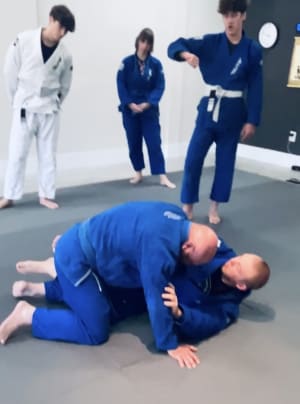
In the world of Brazilian Jiu Jitsu, there’s an ongoing conversation about how students learn best. Two main approaches often come up: traditional instruction and the ecological approach. While both aim to develop skill, confidence, and effectiveness on the mat, they differ greatly in how they get students there. Understanding these differences can help practitioners and coaches decide what style of learning resonates most with them.
Traditional Jiu Jitsu classes are what most people are familiar with. They follow a structured format: warm-ups, technique demonstration, drilling, and then live rolling. The instructor shows a specific technique step by step, and students repeat it multiple times to build familiarity. This approach provides clarity and organization, especially for beginners who benefit from clear instruction and defined steps. It gives students a sense of direction and helps build a technical foundation by focusing on precise movements and repetition.
In contrast, the ecological approach is more dynamic and less focused on memorizing specific techniques. Instead of drilling moves in isolation, students learn through guided live scenarios or games that mimic real training situations. The emphasis is on problem-solving, reaction, and adaptability rather than perfection of form. Coaches set constraints—such as starting from a certain position or limiting available options—and allow students to explore solutions naturally. This approach encourages creativity and helps students develop timing and awareness in a more instinctive way.
One of the biggest differences between the two styles is how they view learning itself. Traditional training often assumes that mastering individual techniques will lead to success in live situations. The ecological approach challenges that idea by suggesting that real skill comes from interacting with unpredictable resistance in real time. Instead of memorizing sequences, students learn to “feel” what works through experience. This can make training more engaging and, for many, more directly applicable to live rolling.
Each approach has its strengths. Traditional training is excellent for building a strong technical base. It provides structure, helps students understand key positions, and ensures that important details are not missed. For beginners especially, having clear guidance can reduce confusion and build confidence. It also allows instructors to pass down knowledge in a systematic and organized way.
On the other hand, the ecological approach excels at developing adaptability and decision-making under pressure. Because students are constantly working in live or semi-live situations, they become more comfortable with unpredictability. They learn how to adjust, react, and problem-solve in the moment rather than relying on pre-planned techniques. This often leads to smoother, more natural transitions during rolling.
Interestingly, many academies are beginning to blend the two approaches. They recognize that while traditional instruction provides essential knowledge, ecological methods help bring that knowledge to life. A class might include technique instruction followed by constraint-based drills that allow students to experiment and apply what they’ve learned. This hybrid style offers the benefits of both structure and freedom.
For students, the best approach often depends on personal learning style. Some people prefer clear, step-by-step instruction and repetition, while others thrive in a more exploratory, hands-on environment. Neither method is inherently better—they simply offer different paths to the same goal: becoming more effective and confident on the mat.
Ultimately, Jiu Jitsu is about growth, and there is no one-size-fits-all method for achieving it. Whether you lean toward traditional training, ecological learning, or a blend of both, what matters most is consistency, curiosity, and a willingness to improve. The beauty of Jiu Jitsu is that it continues to evolve, just like the people who practice it.