
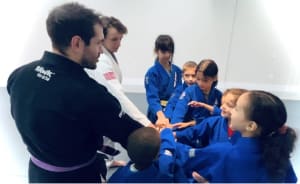
When parents enroll their children in Brazilian Jiu-Jitsu (BJJ), they often expect physical benefits—strength, coordination, and self-defense skills. What many don’t realize is that BJJ also teaches one of the most valuable life skills: discipline. And this discipline doesn’t stay on the mats—it follows kids into the classroom, improving academic performance, behavior, and emotional regulation.
What Is Discipline—and Why Does It Matter for Kids?
Discipline isn’t about punishment. It’s about self-control, focus, and responsibility. A disciplined child:
- Pays attention in class.
- Completes homework on time.
- Handles frustration without acting out.
- Respects teachers and peers.
These skills are essential for academic success—and for life. But discipline isn’t innate. It’s learned through consistent practice and positive reinforcement. That’s where Jiu-Jitsu shines.
How Jiu-Jitsu Teaches Discipline
1. Structured Environment
Every class follows a routine:
- Warm-up
- Technique instruction
- Drilling
- Controlled sparring
- Cool-down
Kids learn to follow directions, stay organized, and respect time limits—skills that transfer directly to school.
2. Clear Rules and Expectations
On the mats, rules are non-negotiable:
- Bow before entering.
- Listen when the coach speaks.
- Respect your partner.
- Tap early and often.
These rules teach respect for authority and personal responsibility—two pillars of classroom success.
3. Goal-Oriented Progress
BJJ uses a belt system. Advancement requires:
- Consistent attendance
- Technical mastery
- Positive attitude
Kids learn that progress comes from effort and persistence, not shortcuts—a mindset that helps with homework, projects, and exams.
4. Delayed Gratification
Belts take time. There’s no instant reward. This teaches patience—a critical skill for academic achievement and emotional regulation.
5. Handling Frustration
On the mats, kids face challenges:
- Getting stuck in a bad position.
- Losing a round.
- Struggling with a new technique.
They learn to stay calm, breathe, and try again—instead of giving up or acting out. This resilience helps them manage school stress and peer conflicts.
The Science Behind Discipline and Academic Success
Research shows that self-regulation and focus are stronger predictors of academic achievement than IQ. Skills like:
- Attention control
- Emotional regulation
- Goal-setting
are all strengthened through structured activities like martial arts. BJJ provides a real-world lab for practicing these skills under pressure.
Academic Benefits of Discipline from BJJ
Improved Focus
On the mats, kids must pay attention to details—hand placement, angles, timing. This sharpens concentration, which helps with reading, math, and problem-solving.
Better Time Management
Regular training teaches kids to balance school, homework, and practice—building organizational skills.
Confidence in Learning
Mastering techniques builds confidence: “I can learn hard things.” This belief transfers to academics, making kids more willing to tackle challenging subjects.
Social and Emotional Benefits
Discipline isn’t just about academics—it’s about relationships. Jiu-Jitsu fosters:
- Empathy: Kids learn to care for partners’ safety.
- Respect: For coaches, teammates, and themselves.
- Conflict resolution: Controlled sparring teaches calm problem-solving.
These skills reduce bullying, improve peer interactions, and create a positive classroom climate.
Practical Tips for Parents
Want to reinforce discipline at home? Try these:
- Set Consistent Routines: Just like class structure, create predictable homework and bedtime schedules.
- Celebrate Effort, Not Just Results: Praise persistence—whether it’s mastering a sweep or finishing a math worksheet.
- Model Discipline: Show your child how you manage time and responsibilities.
- Connect the Dots: Remind them: “The focus you use in Jiu-Jitsu helps you in school too.”
Final Thought
Discipline isn’t about control—it’s about empowerment. Brazilian Jiu-Jitsu gives kids the tools to manage themselves, focus on goals, and thrive in every area of life. When they step onto the mats, they’re not just learning martial arts—they’re building a foundation for success in school and beyond.