
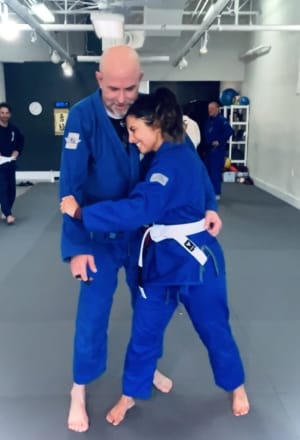
When most people think of self-defense, they picture striking—punches, kicks, maybe pepper spray. But in reality, most real-world altercations happen up close, often starting with grabs, pushes, or attempts to control you. That’s where Brazilian Jiu-Jitsu (BJJ) shines. It’s a martial art built on leverage, control, and escape, making it one of the most practical systems for everyday safety.
At Teddy’s Jiu Jitsu Academy, we teach BJJ not just as a sport, but as a life skill. In this guide, we’ll explore why BJJ is ideal for self-defense, how its techniques apply in real-world scenarios, and practical strategies for staying safe—without escalating violence.
Why Brazilian Jiu-Jitsu Is Perfect for Self-Defense
Unlike striking arts, BJJ focuses on:
- Control over chaos: Neutralizing threats without relying on strength or aggression.
- Leverage over force: Using body mechanics to escape or dominate positions.
- Safety-first principles: Avoiding unnecessary harm while protecting yourself.
Most real-world confrontations involve:
- Grabs (wrist, clothing, hair)
- Pushes or tackles
- Attempts to pin or restrain
- Close-range aggression
BJJ prepares you for these situations by teaching:
- Distance management
- Grip breaks
- Escapes from pins
- Control positions that minimize damage
The Core Principles of BJJ Self-Defense
Before diving into techniques, understand the principles that make BJJ effective:
1. Position Before Submission
Your first goal isn’t to “win”—it’s to get safe. That means:
- Escaping danger zones (under mount, pinned against a wall)
- Creating space to stand or disengage
- Using submissions only as a last resort
2. Leverage Beats Strength
BJJ uses angles, frames, and body positioning to neutralize bigger, stronger attackers. You don’t need to out-muscle anyone—you need to out-position them.
3. Stay Calm Under Pressure
Training teaches you to breathe, think, and act—even when someone is on top of you. Panic is the enemy; composure is your superpower.
4. Control Without Harm
Unlike striking, BJJ allows you to neutralize aggression without causing serious injury—ideal for legal and ethical self-defense.
Situational Awareness: The First Layer of Self-Defense
BJJ teaches physical skills—but prevention starts before contact:
- Scan environments: Know exits, avoid isolated areas.
- Trust instincts: If something feels off, leave.
- Use verbal boundaries: “Stop,” “Back up,” said firmly and clearly.
- Stay calm: Panic clouds judgment; breathing restores clarity.
Why BJJ Is Safer Than Striking for Real-World Defense
- Legal considerations: Striking can cause severe injury and legal trouble. BJJ offers control without excessive harm.
- Close-range reality: Most altercations happen in tight spaces—where grappling dominates.
- Risk reduction: No wild swings, less chance of accidental escalation.
Building Confidence Through Self-Defense Training
Knowing you can protect yourself changes everything:
- You walk taller.
- You speak with confidence.
- You radiate calm in stressful situations.
Confidence isn’t about aggression—it’s about preparedness.
Your Next Step
Ready to learn practical skills that protect you and your loved ones? Join us at Teddy’s Jiu Jitsu Academy. Start with a free trial class and discover why BJJ is the ultimate self-defense system.
Self-defense isn’t about fear—it’s about freedom. Brazilian Jiu-Jitsu gives you the tools to stay calm, stay safe, and walk through life with confidence. Whether you’re a parent, professional, or student, these skills matter. And they start with one simple step: showing up on the mats.