
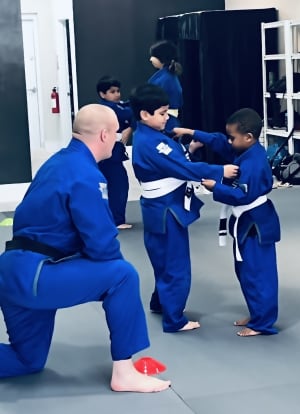
When parents consider enrolling their child in Brazilian Jiu-Jitsu (BJJ), one of the first questions they ask is: “Is it safe?”
It’s a valid concern. Martial arts often conjure images of high-impact strikes, broken bones, and aggressive sparring. But here’s the truth: Brazilian Jiu-Jitsu is one of the safest martial arts for kids and adults alike—when taught in a structured, professional environment.
At Teddy’s Jiu Jitsu Academy, safety is our top priority. We understand that parents want their children to learn confidence and discipline—not come home with injuries. In this blog, we’ll break down why BJJ is safer than you think, address common misconceptions, and explain the protocols we use to keep every student safe.
Why Parents Worry—and Why It’s Normal
Before diving into the facts, let’s acknowledge the concerns:
- Fear of injuries: Parents worry about broken bones, concussions, or joint damage.
- Aggressive sparring: The idea of kids “fighting” sounds risky.
- Lack of control: Parents wonder if instructors can truly manage a room full of energetic kids.
These concerns are understandable—but they’re based on misconceptions. Let’s clear them up.
The Nature of Brazilian Jiu-Jitsu: Why It’s Different
Unlike striking arts (karate, taekwondo, boxing), BJJ is a grappling-based martial art. That means:
- No punches or kicks.
- No head strikes.
- No high-impact collisions.
Instead, BJJ focuses on:
- Leverage and technique: Using body mechanics to control an opponent.
- Positional control: Learning how to escape, defend, and maintain safe positions.
- Submissions: Techniques that signal control—but are practiced with safety and respect.
This emphasis on control and technique makes BJJ inherently safer than many other combat sports.
Common Misconceptions About BJJ Safety
Myth 1: “Kids will get hurt because it’s a combat sport.”
Reality: BJJ is designed for self-defense and control, not harm. Classes emphasize slow, technical practice, not reckless aggression.
Myth 2: “Joint locks and chokes are dangerous.”
Reality: Kids’ programs rarely teach advanced submissions early on. When they do, it’s under strict supervision, with clear tap-out protocols.
Myth 3: “Sparring means fighting.”
Reality: Sparring in BJJ is controlled rolling—a cooperative exchange where both partners learn. Coaches monitor intensity and pair students appropriately.
Why BJJ is Safer Than Many Sports
Consider this:
- Soccer: High risk of knee injuries and concussions from collisions.
- Football: Frequent head impacts and broken bones.
- Basketball: Ankle sprains and ACL tears are common.
BJJ injuries are rare—and usually minor (like mat burns or small bruises). Why?
- No running or jumping.
- No head trauma.
- No uncontrolled impacts.
In fact, studies show that injury rates in BJJ are significantly lower than in contact sports like football or even recreational activities like skateboarding.
Safety Protocols at Teddy’s Jiu Jitsu Academy
We take safety seriously. Here’s how we protect every student:
1. Structured Curriculum
- Kids start with fundamentals: balance, movement, and basic positions.
- Advanced techniques (like submissions) are introduced gradually and safely.
2. Tap-Out Culture
- Students learn to tap early and often—a universal safety signal.
- Coaches reinforce that tapping is smart, not shameful.
3. Controlled Sparring
- Intensity is scaled to age and experience.
- Coaches pair students by size, skill, and temperament.
- No unsupervised rolling—ever.
4. Mat Safety
- Clean, cushioned mats reduce impact injuries.
- Regular cleaning prevents skin infections.
5. Hygiene Protocols
- Mandatory clean uniforms.
- No shoes on mats.
- Hand sanitizing available.
- Don’t train if you are sick or not feeling well.
6. Coach Supervision
- Low student-to-coach ratio.
- Coaches intervene immediately if intensity rises.
- Positive reinforcement for safe behavior.
Teaching Kids to Be Safe Partners
Safety isn’t just about rules—it’s about culture. We teach kids:
- Respect for partners: No rough play, no ego.
- Communication: Ask if a partner is ready before starting.
- Self-awareness: Recognize fatigue and take breaks.
This builds empathy and responsibility—skills that extend beyond the mats.
What About Injuries? The Real Numbers
Minor injuries (like mat burns or small bruises) happen occasionally—just like in any physical activity. Serious injuries? Extremely rare in kids’ BJJ when proper protocols are followed.
Why?
- Techniques are taught progressively.
- Kids learn control before intensity.
- Coaches monitor every interaction.
Benefits That Outweigh Risks
While parents worry about injuries, they often overlook the mental and physical benefits:
- Confidence: Kids learn they can handle challenges.
- Discipline: Structured classes teach focus and respect.
- Problem-solving: Every roll is a puzzle—boosting cognitive skills.
- Fitness: Strength, flexibility, and coordination improve naturally.
These benefits last a lifetime—and far outweigh the minimal risk of minor injuries.
How Parents Can Support Safety
- Choose a reputable academy: Look for certified coaches and clear safety policies.
- Communicate with instructors: Share any concerns or medical conditions.
- Reinforce safety at home: Remind kids to respect partners and tap early.
Every parent wants their child to thrive—and stay safe. Brazilian Jiu-Jitsu offers both. With proper instruction and protocols, it’s one of the safest, most rewarding activities your child can do. On the mats, they’ll learn skills that protect their body, strengthen their mind, and build a foundation for life.