
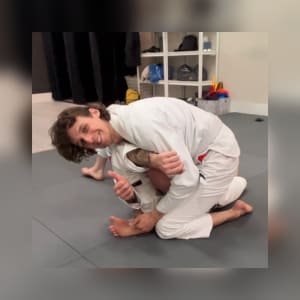
January brings a surge of motivation. New gis, new goals, fresh commitment. Then life happens—work ramps up, kids’ schedules shift, someone gets sick, a project lands, and suddenly your well-intentioned training plan starts slipping. If you’ve ever felt that “fall off” and wondered how people manage to make Jiu-Jitsu a lifestyle rather than a short-lived resolution, this post is for you.
At Teddy’s Jiu Jitsu Academy, we’ve seen students at every stage—from brand-new white belts to seasoned brown and black belts—turn “I’ll try” into “I train.” Consistency isn’t about willpower alone. It’s a skill set, a system, and a mindset you can build. Let’s walk through practical strategies to balance work, family, and training—and transform your commitment into something automatic, sustainable, and deeply rewarding.
Why “Consistency” Beats “Intensity”
Intensity is exciting. Consistency is effective.
- Intensity is that first-week enthusiasm: 4 classes in 7 days, a new diet, ice baths, sunrise runs. It’s powerful—but it’s also hard to sustain.
- Consistency is quieter: 1–3 classes every week for months, even when you’re busy or tired. It’s less glamorous—but far more transformative.
In skill-building sports like Brazilian Jiu-Jitsu, progress depends on frequency, quality reps, and mental clarity—not marathon sessions. Your brain encodes patterns through regular exposure. Your body adapts through manageable workloads. That means it’s better to train multiple short sessions over time than to binge-train and burn out.
Bottom line: The lifestyle wins over the sprint. And you can design a lifestyle that fits real life.
Step 1: Set Outcomes, Systems, and Identity (In That Order)
Most people start the year with outcomes:
- “I want to lose 10 pounds.”
- “I want to get my blue belt.”
- “I want to compete.”
Outcomes are useful, but fragile. When life gets chaotic, outcomes alone don’t hold. To succeed long-term, you need three layers:
- Outcome (what you want):
- Example: Earn your blue belt in 12–24 months.
- Example: Train 100 times this year.
- System (how you’ll do it):
- Example: Train Monday and Thursday evenings, plus Saturday morning.
- Example: Pack your bag the night before; stretch for 5 minutes daily; track sessions.
- Identity (who you are):
- Example: “I’m someone who trains Jiu-Jitsu.”
- Example: “I’m the kind of parent who models healthy movement and discipline.”
When your calendar gets messy, identity drives action. If you see yourself as a person who trains—no matter how busy—you’ll find a way (even if it’s a shorter class, drilling session, or at-home solo drill).
Action: Write down one outcome, one system, and one identity statement for your training. Keep it visible—in your gym bag, on your phone lock screen, or on your fridge.
Step 2: Build a Minimal Viable Training Plan (MVTP)
Think of your training like a business plan. There’s:
- Optimal Plan (when life is smooth), and
- Minimum Viable Plan (your backup, when life gets chaotic).
Optimal Plan (Example):
- Adults: 3 classes/week (e.g., Tue/Thu evenings + Sat morning), 1 light drilling session, 1 mobility session.
- Parents: 2 classes/week for yourself + 1 kids’ class for your child; stretch together at home.
- Competitors: 4 classes/week + 1 conditioning + 1 strategic review session.
Minimum Viable Plan (Example):
- Adults: 2 classes/week, 15-minute at-home solo drill (shrimping, hip switches, sit-outs), and 5-minute post-class note review.
- Parents: 1 class/week for you, 1 kids’ class; 10-minute family movement time (bear crawls, bridges, balance games).
- Competitors: 3 classes/week with focused situational sparring (choose one positional goal per round).
The MVTP ensures you never “fall off.” If you miss a day, pivot to the minimum plan rather than quitting or guilt spiraling.
Action: Write your optimal plan and minimum plan. If you miss one class, don’t “make it up” with heroics—just switch to your minimum plan and keep momentum.
Step 3: Make Your Calendar Non-Negotiable (But Flexible)
The golden rule: Schedule your training like a meeting with your future self.
Most people treat training as something they’ll do when “free time” appears. Spoiler: it doesn’t. Instead:
- Sign up for your classes before work fills the week.
- Share the schedule with your family/partner to align commitments.
- Use a 2+1 rule: Two anchor classes you rarely miss + one flexible session you can slide between days.
Pro tip: If you commute or have variable hours, pick classes adjacent to existing routines (e.g., train right after work or drop the kids at class and train immediately after). The fewer transitions, the easier it is to stick with it.
Step 4: Use Micro-Habits to Remove Friction
The moments that break consistency are rarely catastrophic—they’re tiny friction points:
- You can’t find your belt.
- Your gi is still wet.
- You forgot your water bottle.
- You didn’t eat properly and now you’re too drained to roll.
Stack small habits to remove friction:
- Night-before ritual: Pack your bag, set out your gi, fill your bottle, charge your phone/headphones.
- Post-class reset: Wash your gi immediately, hang it, toss rashguard in the hamper, restock tape, refill mouthguard case.
- “Go Bag” hack: Keep a spare rashguard/shorts, tape, mouthguard, deodorant, travel-size body wash in your car or locker.
Micro-habit list (choose 2–3 to start):
- Two-minute bag check before bed.
- Five-minute mobility (hips/shoulders) while watching TV.
- 30-second journal: write 1 technique, 1 mistake, 1 next-round focus.
- Protein + water pre-class; protein + carbs post-class.
- Set a “leave for class” alarm that rings with your favorite hype song.
Small habits create momentum. Momentum creates consistency.
Step 5: Train Smart: Intensity Cycling and Focused Rounds
You don’t have to train “hard” every session. In fact, intensity cycling helps you stay in the game long-term:
- Green sessions (easy): Drilling, technique focus, light movement, positional flow.
- Yellow sessions (moderate): Controlled sparring, situational rounds, specific guard passing or escapes.
- Red sessions (hard): Competition-style rounds, conditioning finisher, strategic deep work.
Decide your week’s mix based on life demands:
- Heavy work week? More green and yellow.
- Light work week? Add a red day.
- Coming off sickness or travel? All green, plus breath work and mobility.
Add focused rounds to prevent overwhelm:
- Choose one skill per round: e.g., “Today, I fight for top position,” or “This round,
I only work half guard,” or “I’m drilling late-stage escape.” Specificity accelerates learning without requiring huge time investment.
Step 6: Make Recovery a Habit, Not a Reaction
Burnout is less about training, more about under-recovery (sleep, nutrition, stress).
- Sleep: Aim for 7–9 hours. If not possible every night, bank 20-minute naps on your busiest days.
- Nutrition: Prioritize protein and whole-food carbs around training.
- Add electrolytes if you sweat heavily.
- Mobility: Five minutes counts. Hips, thoracic spine, neck—move them daily.
- Stress: Use your training as a pressure release, not another stress source. Focus on “presence,” breathe through rounds, and be kind to yourself when life hits hard.
Parent tip: Involve your kids. Short movement games (animal walks, balance drills) help them—and get you moving on off-days.
Step 7: Use Social Accountability Without Pressure
Your training community is a powerful consistency tool—if used wisely.
- Buddy system: Choose one teammate you text when you’re on your way.
- Coach touchpoint: Ask a coach (like Professor Teddy in spirit!) to help you set a simple focus, like “guard retention month.”
- Public commitment: Tell your family: “I train Tue/Thu nights.” They’ll start rooting for you (and planning around your schedule).
- Mini-milestones: Celebrate 10 sessions, 25 sessions, 50 sessions—track your check-ins on a simple note or calendar.
Avoid comparison traps. Progress isn’t linear and everyone’s life meter is different. The only meaningful metric is: Did you train this week?
Step 8: Make Plateaus Your Superpower
Plateaus feel discouraging—but they’re actually where your brain consolidates patterns. Instead of quitting when progress slows:
- Change the lens: Switch from “Am I better?” to “What did I learn?” or “What did I attempt?”
- Run skill sprints: Focus on one micro-skill for 4 weeks (e.g., “late-stage escape,” “knee-cut pass entries,” “armbar defense timing”).
- Video notes: Record one round per week. Review for 10 minutes and write one fix for next time.
Over months, this approach builds undeniable momentum—and confidence.
Step 9: Parents—Design the Family Training Ecosystem
Parents have the busiest schedules, but also the highest leverage. Jiu-Jitsu becomes more than a sport—it becomes the family’s shared practice.
- Stack classes: Bring your child to kids’ class and stay for your adult class. Make Wednesday a “gym night.”
- Role modeling: Show your child what commitment looks like. Let them see you train, make mistakes, laugh, improve.
- Home mini-mats: A small puzzle mat at home turns into playful practice time. Teach kids shrimping, bridges, bear crawls—make it fun.
- School transfer: Link mat lessons (respect, effort, problem-solving) to schoolwork. Kids who reflect on learning in one domain often improve in others.
You don’t need perfection. You need presence. Even one consistent training night changes family culture for the better.
Step 10: Create Your “Tripwire” for Busy Seasons
Life has seasons—tax time, conferences, exams, recitals. Don’t fight reality. Prepare for it:
- Tripwire plan: Choose a default training rhythm for busy seasons.
- Example: “In April and May, I only train Tuesdays and do Saturday open mat if work allows.”
- Grace policy: If you miss your plan, no guilt. Just return next session.
- Micro-doses: 10-minute drills at home + 1 class/week counts.
- Stay connected: If you’re traveling, message your coach, watch an instructional clip, or review your journal. Maintaining connection preserves identity momentum.
Consistency is not about never missing. It’s about always returning.
What to Do When You’re Sick, Injured, or Really Overwhelmed
Set safety-first guidelines to avoid burnout and setbacks:
- Sick: No training with fever or respiratory symptoms. On recovery days, do breath work, gentle mobility, and watch one technique video—no guilt.
- Injured: Train “around” the injury. If your knee is out, drill upper-body control and grips from seated guard. Tell your training partners—and choose controlled rounds.
- Overwhelmed: Drop to your minimum plan. Don’t chase the missed sessions with extra-hard training. We train for life—not to punish ourselves.
Mindset Shifts That Make Consistency Easier
- “Some is better than none.” Five minutes of drilling, one class in a chaotic week, or a single focused round—these are wins.
- “Slow is smooth, smooth is fast.” When you train with calm focus and technical intention, you progress faster than with wild intensity.
- “Return, don’t regret.” If you stumble, don’t spiral. Return to the mat next session. That’s the whole game.
- “Train with kindness.” Toward yourself and others. Respect your body’s signals. Be the teammate people love to roll with.
- “Stack wins outside the mat.” Sleep, nutrition, stress management—these are not extras; they’re essential.
Practical Tools You Can Use This Week
- One-page training tracker:
- Columns: Date | Class Type | Focus | Rounds | One Improvement |
- Next Time Focus.
- Family calendar sync:
- Add kids’ classes and your classes; label them “non-negotiable.”
- Technique “Top 3” list:
- Choose 3 techniques to focus on this month (e.g., knee-cut pass entry, cross-collar choke finish from mount, technical stand-up under pressure).
- Post-class script:
- “What did I try? What worked? What felt sticky? What will I try next time?”
Common Pitfalls (And How to Avoid Them)
- All-or-nothing thinking:
- Fix: Use your minimum viable plan. One class is success.
- Overtraining after a missed week:
- Fix: Resume normal rhythm. Burnout starts when you try to “catch up.”
- Neglecting sleep and nutrition:
- Fix: Pre-pack a protein snack; set a bedtime alarm. Small changes matter.
- Comparing belts and bodies:
- Fix: Compare only to your last month’s notes. Your path is yours.
- Letting logistics derail you:
- Fix: Night-before prep, car kit, and a default “gym night” help tremendously.
Final Thought: Make the Mat Your Constant
Life won’t get less busy. But you can build a life where training is woven into your weekly rhythm—a non-negotiable that boosts your mental health, sharpens your problem-solving, strengthens your body, and enriches your family culture.
Let this year be the year you trade short-lived resolutions for a reliable system and a strong identity: “I’m someone who trains Jiu-Jitsu.” When work surges or schedules collide, you won’t quit. You’ll adapt. And you’ll keep stepping onto the mats.
Call to Action
Ready to turn your intention into a lifestyle?
- Adults: Pick your two anchor classes this week. Tell a friend. Show up.
- Parents: Choose one kids’ class and one adult class you’ll pair. Make it a family routine.
- Returning students: Start with our minimum viable plan—one class this week + one class next week. No heroics needed.
Come train with us at Teddy’s Jiu Jitsu Academy.
Our coaches will help you design a plan that fits your life—so consistency becomes second nature. See you on the mats!