
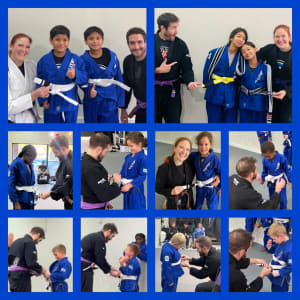
Brazilian Jiu-Jitsu (BJJ) is more than just a martial art—it’s a journey of personal growth, resilience, and empowerment. For kids, this journey is marked by milestones that go beyond physical skill. One of the most impactful elements of this progression is earning stripes on their belt. While stripes may seem like small pieces of tape, they carry enormous significance in a child’s development. They represent effort, perseverance, and achievement, and they play a critical role in building confidence. In this blog, we’ll explore why stripes matter, how they enhance confidence, and the broader benefits they bring to a child’s life—both on and off the mats.
What Are Stripes and Why Do They Matter?
In BJJ, belts signify rank, but progression between belts can take years—especially for kids. Stripes are incremental markers placed on the belt to recognize progress toward the next rank. For example, a child with a white belt might earn up to four stripes before advancing to a gray belt.
These stripes serve as mini-goals, breaking down the long journey into achievable steps. For kids, this is crucial because:
- Children thrive on recognition. Stripes provide tangible evidence that their hard work is paying off.
- Instead of waiting years for a new belt, stripes keep kids engaged and excited about their progress.
- Stripes create a clear roadmap, helping kids understand that improvement is a process.
The Psychology Behind Stripes and Confidence
Confidence in children is built through experiences that reinforce their sense of competence and self-worth. Stripes do exactly that. Here’s how:
- Visible Achievement: Kids need to see that their effort leads to results. Stripes are a visible, concrete reward for intangible qualities like persistence and discipline. When a coach places a stripe on a child’s belt, it sends a powerful message: “You are improving. You are capable.”
- Positive Reinforcement: Psychologists emphasize the importance of positive reinforcement in shaping behavior. Stripes act as a reward system that encourages kids to keep showing up, trying hard, and learning.
- Building Self-Efficacy: Self-efficacy—the belief in one’s ability to succeed—is a cornerstone of confidence. Each stripe reinforces this belief, teaching kids that challenges can be overcome through effort.
Stripes as Confidence Catalysts
Confidence isn’t just about feeling good; it’s about taking action despite fear or uncertainty. Stripes help kids develop this kind of confidence in several ways:
- Overcoming Challenges: BJJ is hard. Kids face moments of frustration when techniques don’t click or when they lose in sparring. Stripes remind them that progress is happening—even if it’s slow. This teaches resilience and the value of persistence.
- Encouraging Goal Setting: Stripes create short-term goals within the long-term journey. Kids learn to set objectives (“I want my next stripe”) and work toward them. This skill translates to school, sports, and life.
- Fostering a Growth Mindset: When kids earn stripes through effort—not talent—they internalize the idea that improvement comes from hard work. This growth mindset is linked to higher confidence and better coping skills.
Beyond the Mats: Life Skills Gained Through Stripes
The benefits of earning stripes extend far beyond the academy. Here’s how:
- Kids who learn to persist in BJJ often apply the same mindset to schoolwork.
- Stripes are celebrated in class, creating a sense of belonging and community.
- Waiting for stripes teaches patience and emotional control—skills that help kids handle disappointment in other areas.
The Role of Coaches and Parents
Stripes are powerful, but their impact depends on how they’re presented. Coaches and parents play a vital role in making stripes meaningful:
- Emphasize the hard work behind the stripe.
- Every child progresses at their own pace. Stripes should never become a source of pressure.
- When awarding a stripe, explain what the child did well and what they can improve.
Common Questions About Stripes
Do stripes make kids too focused on rewards?
Not if handled correctly. Stripes should be framed as recognition of effort, not as the ultimate goal. The real reward is the skill and confidence gained along the way.
What if my child doesn’t get a stripe when others do?
This is an opportunity to teach resilience. Encourage your child to focus on their own progress and remind them that stripes are earned through consistent effort.
Practical Tips for Parents
- A simple “I’m proud of you” goes a long way.
- Use stripes as examples of how effort leads to success.
- Avoid pressuring your child about stripes. Let them enjoy the journey.
Conclusion: Stripes Are Small, But Their Impact Is Huge
In Brazilian Jiu-Jitsu, stripes are more than tape—they’re confidence builders, motivation boosters, and life lesson teachers. For kids, each stripe is a reminder that they are capable, resilient, and growing—not just as martial artists, but as individuals. So, the next time your child earns a stripe, celebrate it. It’s not just a step toward the next belt—it’s a step toward becoming a confident, empowered person.